

Digital Agency Blog
The Super Bowl: The World’s Biggest Ad Stage
Every February, the Super Bowl delivers more than football. It delivers the most concentrated moment of attention in modern media—a rare window when everyone is watching the same screen at the same time.
For advertisers, it’s the ultimate high-stakes arena. For advertising and marketing agencies like FabCom, it’s a masterclass in brand strategy, cultural relevance, and risk tolerance.
Let’s break down what Super Bowl advertising looks like in 2026, how we got here, and why some commercials become legends while others become very expensive background noise.
The Price of a Moment: Super Bowl Ad Costs in 2026
In 2026, a 30-second Super Bowl ad costs roughly $8 million—just for the airtime. That’s before production, celebrity talent, post-production, digital extensions, and PR amplification enter the picture.

When all is said and done, many brands invest $15–$50+ million into a single Super Bowl moment. That puts the cost at roughly $266,000 per second of airtime—making it the most expensive real estate in advertising.
But here’s the important distinction: Super Bowl ads aren’t media buys. They’re brand statements.
How We Got Here: A Quick Trip Through Super Bowl Ad History
Super Bowl advertising didn’t always come with eight-figure price tags. Here’s how much a 30-second Super Bowl ad has cost over the years (average or typical values):
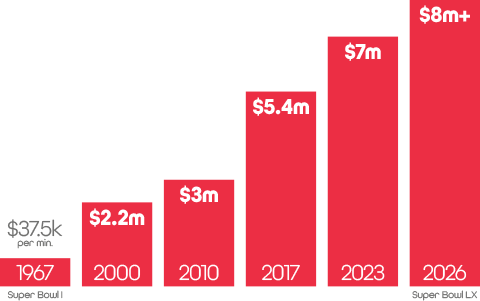
That’s more than a 200x increase since the first Super Bowl—a reflection of two things:
- The Super Bowl’s unmatched audience concentration
- The cultural weight ads now carry beyond the broadcast itself
While networks rarely disclose exact invoices, extended-length commercials often claim the title. One standout ad, some say the most expensive Super Bowl ad to date, was Amazon’s 130-second “Mind Reader” spot, which reportedly cost $25–26 million including airtime and production. At that level, you’re no longer buying a commercial—you're producing a short film with a guaranteed audience.
The Audience Brands Are Paying For
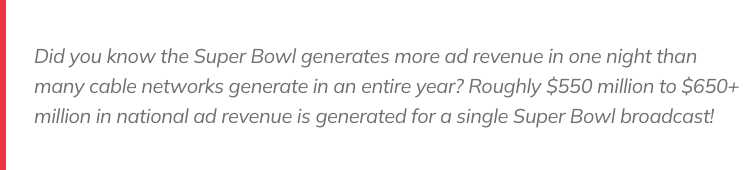
The Super Bowl remains the most-watched broadcast in the U.S., with recent games pulling 120+ million viewers across broadcast and streaming platforms.
What makes this audience unique isn’t just its size—it’s its behavior:
- People don’t skip the ads
- Viewers talk about the ads
- Ads are replayed, shared, memed, ranked, and debated for weeks
From a marketing perspective, that’s gold.
During and immediately after the game, Google searches for advertisers often spike 200–500%. Even legacy brands (beer, snacks, insurance) see huge lift. Many advertising and marketing agencies now design Super Bowl ads specifically to trigger a “Wait… what was that?” search moment.
The Evolution of Super Bowl Ads
Super Bowl advertising no longer lives and dies in a 30-second TV spot. Because of social media, streaming platforms, and always-on digital channels, Super Bowl campaigns now unfold across weeks—sometimes months—before and after game day.
Brands use these platforms to build pre-game momentum and create post-game longevity, ensuring their investment doesn’t disappear when the final whistle blows.
Today, many advertisers release teaser content well before kickoff. These aren’t full commercials—they're intentional breadcrumbs designed to:
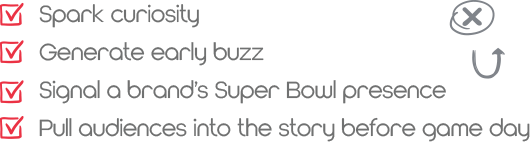
A recent example of this was Fanatics Sportsbook’s teaser featuring Kendall Jenner, which leaned into the internet’s long-running “Kardashian curse” meme. By playfully referencing perceived downturns tied to her past relationships with NBA players, the brand used humor and pop culture familiarity to introduce the brand’s Super Bowl campaign.
Notably, the teaser didn’t lead with product details or brand positioning. Instead, it tapped into a cultural conversation that was already happening online—making audiences talk hours and days before the game even airs.
Once the game ends, the spotlight doesn’t disappear—it shifts platforms.

Strong Super Bowl campaigns amplify the commercial across:
- Full-length releases on YouTube
- Short-form cut-downs on TikTok and Instagram
- Paid social and search activation
- Influencer reactions and commentary
What was once a 30-second, multi-million-dollar broadcast moment can now be stretched into days or even weeks of visibility, engagement, and brand recall.
In 2026, the Super Bowl commercial now isn’t the entire campaign—it’s the centerpiece. Brands that fail to plan for both pre-game momentum and post-game longevity risk spending millions on a moment that’s forgotten by Monday morning.
But this extended lifecycle also raises the stakes. When Super Bowl ads live longer, travel faster, and invite real-time reaction across platforms, the margin for error shrinks. Every creative choice—from teaser to final cut—carries more weight, more scrutiny, and more potential impact.
The Balance of Risk + Reward
Super Bowl advertising is a high-stakes risk-reward game (no pun intended). The stakes are not just financial—they're cultural.
Super Bowl ads are exposed to the widest possible audience, which means the risk of backlash is magnified. Nobody can forget Kendall Jenner’s Pepsi ad from years ago, and not in a good way. When a brand misreads the cultural moment, the consequences can be immediate and severe. But there’s another risk that’s often overlooked: the risk of being forgettable.
A safe ad may avoid controversy, but it can also fail to create the kind of emotional or cultural resonance that makes people talk. And in the Super Bowl, silence is expensive. When it works, a Super Bowl ad doesn’t just reach an audience—it becomes part of pop culture. A successful ad can:

When it’s not successful, it’s remembered for all the wrong reasons and the brand pays for it in both reputation and dollars. The difference often comes down to clarity, relevance, and the ability to stand out without losing the brand’s core message.
And standing out isn’t easy on the biggest advertising stage in the world. With a limited number of commercial slots and dozens of brands competing for attention in a single broadcast, every spot exists in a tightly packed, highly competitive environment.
How Many Ads Run During the Super Bowl?
A typical Super Bowl features:
- 60–65 national commercials
- 55–60 unique advertisers
- A mix of 30-, 60-, and extended 90+ second spots
Some brands also buy:
- Pregame placements
- Halftime adjacency
- Post-game inventory
The Big Marketing Takeaway
From an advertising and marketing agency standpoint, Super Bowl advertising is less about cost—and more about commitment.
If a brand isn’t willing to:
- Invest in strategy before creative
- Design for cultural relevance
- Extend the story beyond 30 seconds
- Accept the risk that comes with bold ideas
Then the Super Bowl can become the most expensive missed opportunity in marketing. But when it’s done right? A Super Bowl ad doesn’t just reach an audience—it becomes part of pop culture. And that’s the kind of impact brands actually remember long after the final whistle.